

In 2026, we’re looking back at 30 years of the Yukon Anti-Poverty Coalition. Choose a story below to learn more about some of the milestones from our past.
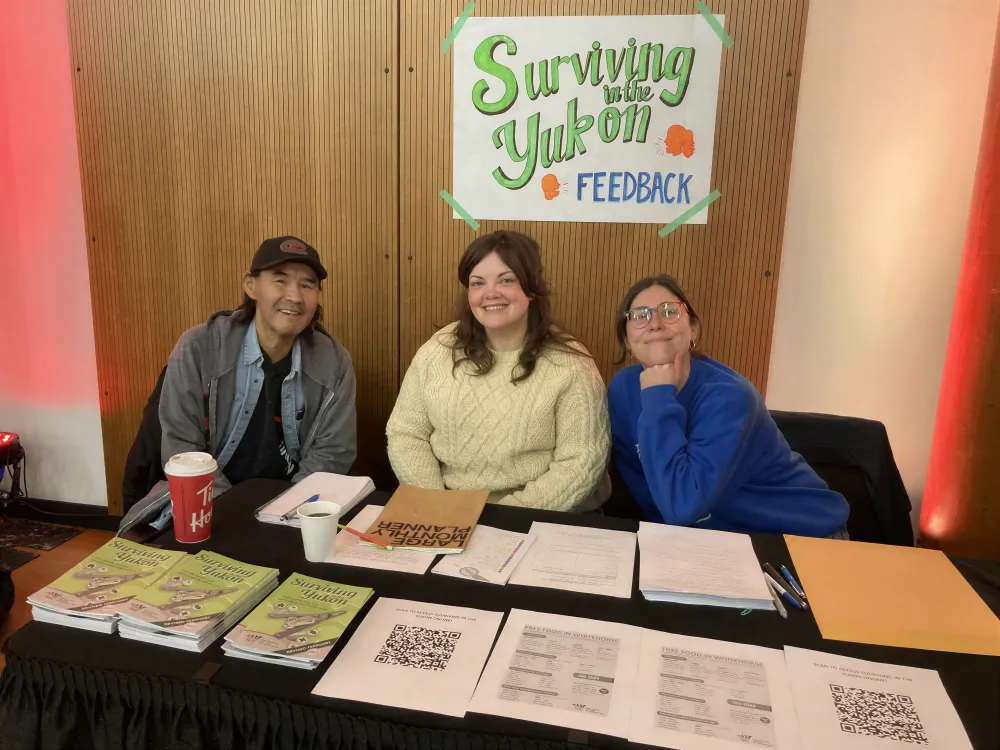
These days, the Surviving In the Yukon resource is over 75 pages and available online. It’s grown a lot from its early beginnings!
Back in the 1980s, a dedicated group of citizens who called themselves The Collaborators noticed a gap in Whitehorse.
People did not know what kinds of services were available. Folks new to town or new to needing support would have to run around to different places to learn where to get free or low-cost food, clothing, and access to showers or laundromats. Learning about housing, counselling or legal aid services was confusing and hard to navigate.
The Collaborators helped fill this gap by creating a double-sided fact sheet called “Surviving in Whitehorse” for distribution in public spaces and agencies. On a volunteer basis, they wrote, designed, printed and distributed versions of the resource until the Yukon Anti-Poverty Coalition was established in 1996.
The guide was available at the Whitehorse Public Library, the Yukon government reception desk, City of Whitehorse and Kwanlin Dun First Nation offices, as well as many social service non-profits.
Over the years the resource was expanded to include services in more Yukon communities and was renamed “Surviving In the Yukon.” The tool became a helpful resource for service providers as they support clients. One edition was translated into French as the result of federal funding.
During the Covid-19 crisis (2020-2022) YAPC developed an electronic “Free Food in Whitehorse” poster that is updated monthly, available online, and printed/posted in many Whitehorse agencies.
Generosity from Whitehorse printing business “The Paper Trail” (formerly Mailboxes Etc.) and Arctic Star Printing has provided discounted production costs for many different versions of the guide since the 1980s.
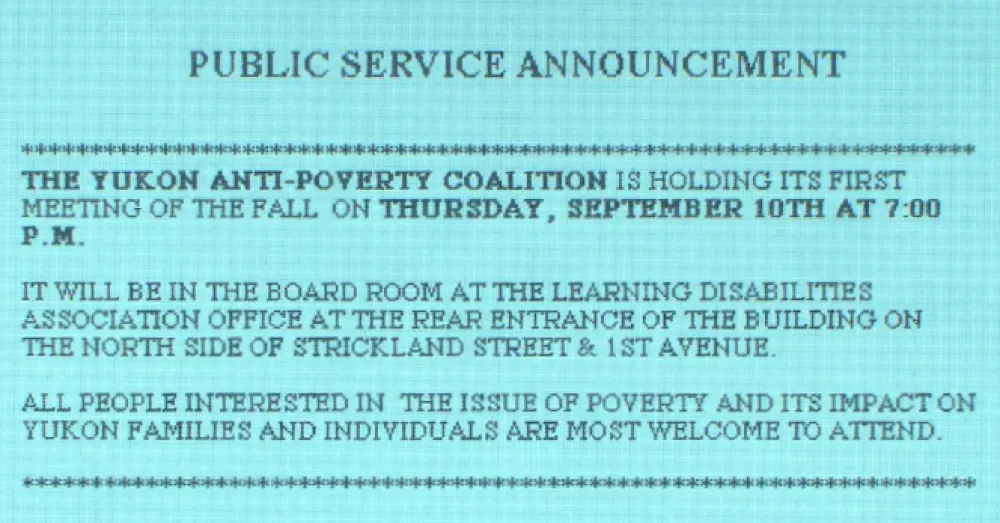
The Yukon Anti-Poverty Coalition has been a catalyst for significant good changes in the Yukon community since 1996, advocating for collaborative approaches to helping people with their needs for adequate income, housing, food and access to services. The Coalition has also nurtured the development of many organizations rooted in its work.
The Coalition was created out of an intention to collaborate and strengthen advocacy between people who were already actively working on a range of social justice issues as well as people experiencing challenges.
In the 1980s, The Collaborators were concerned citizens who helped people find resources around town and worked closely with different church groups and non-profits to promote soup kitchens and other low-cost services. This was an informal group of people, some of whom worked in Whitehorse non-profits and government agencies.
In the winter of 1995-1996, the Yukon Minister of Health and Social Services called for a public consultation that included the question, “Where should cuts be made to the Yukon Social Assistance (SA) program?” There was a myth that low income people from B.C. and Alberta were “flocking to the Yukon to get on welfare.”
The Yukon Family Services Association (YFSA) Family Committee had been concerned about poverty in Yukon families and responded with a parent support group, a CHON radio call-in show and a survey sent to Yukon public schools. Eighteen schools replied quickly to report seeing an increase in the number of students experiencing poverty and food insecurity.
That committee also researched and created a report on Yukon SA rates and government income figures to highlight that the Yukon had higher rates of low income households than southern Canada. In March 1996, YFSA published its findings and the public response resulted in no cuts to the SA program.
What became very obvious to YFSA was that the people most affected by government SA policies were being ignored by people in power, and that something needed to be done to amplify their voices. In May 1996, an initial public “Meeting About Poverty” ended with volunteers signed up for a coordinating committee, pre-election committee, media/education/information committee, direct delivery committee and an Anti-Poverty Week committee. These efforts resulted in the creation of the Yukon Anti-Poverty Coalition.
Many community members took up the call to action; YAPC is grateful to all these early volunteers, some of whom continue to offer their time and expertise to this day.
The Coalition became incorporated under the Yukon Societies Act in 1998, after careful consideration about how to structure the organization. YAPC is committed to an inclusive, non-hierarchical approach, amplifying grassroots voices, and seeking consensus before advocacy takes place.
Everyone is invited to monthly gatherings, opening with a circle and an exchange of concerns, to bring awareness to community challenges and connect people who want to work together on solutions to the gaps they see.
On October 17, 1996, people walking near the Elijah Smith Building on Main Street in Whitehorse saw a line of brightly coloured clothing hanging on a clothesline. This was the first public awareness campaign of the newly-formed Yukon Anti-Poverty Coalition, to “air the dirty laundry” of poverty facts.
A paisley shirt, purple corduroy pants, a small child’s dress and an infant sleeper were among the items hanging there, each with a tag describing statistics about child poverty rates, Yukon social assistance facts, impacts of childhood poverty and more.
The event was organized by YAPC volunteer Sara Crangle, a single mother living in poverty who wanted to bring attention to the reality of poverty in the Yukon.
“As a single parent in Canada, I have a 50 percent chance of living in poverty for the rest of my life, and it concerns me. I don’t want my child to grow up in poverty and the long-term effects that poverty entails,” Crangle said.
YAPC co-chair Ross Findlater said, “It’s easy to be unaware of it because unless you know people directly, or are living in poverty yourself, it’s not something that you run into day-to-day, Most of us are blessed with fairly adequate resources in the Yukon. And I think, therefore, when you’re not aware, people don’t take any action to eliminate the inequities that do exist.”
The event coincided with the 1996 International Day for Eradication of Poverty. News of this campaign reached Ottawa and a photo made it into the Ottawa Citizen.

The roots of the flourishing D.U.G.S (Downtown Urban Gardeners’ Society) began during monthly Yukon Anti-Poverty Coalition gatherings. In 1997, YAPC called a meeting to gather people interested in community gardening, and this seeding resulted in 15 people who connected to brainstorm about how to get the project planted.
The D.U.G.S. story is a testament to how bringing together people can grow into beautiful community actions.
During their early years, the Second Opinion Society hosted the budding organization’s meetings so volunteers could gather and organize. D.U.G.S. was incorporated in 1997 in order to provide public accountability from the outset, and early on its members chose a consensus-based decision-making model.
They had contacted the City of Whitehorse Land Planning department and were able to secure land through long-term, rent-free leases. However, the group had to meet the challenge of funding the development of the land and garden infrastructure.
The new city garden location at Ray St and 7th Ave was a challenge people were eager to work on. It was an area that was not only sloping and against the clay cliffs of downtown Whitehorse, but also full of asphalt, buried concrete, with compacted soil that was filled with clay & cobbles.
Not to be deterred, D.U.G.S. dug in and raised funding to purchase soil, lumber, liners, backhoe levelling, ditching services, a waterline, fencing material, and expenses for a part-time coordinator to help make the garden a reality.
A strong commitment to sustainability and community reliance produced a crop of salvaged material like water gallon drums, manure, organic waste for composting, and a large tool shed. By 1998 they had garden beds in and the first seeds planted for a community garden that is still thriving in 2026.
Over the years, many non-profit and other groups have benefited from the donations of surplus food grown by D.U.G.S. gardeners. The organization also created a guide full of resources for northern gardeners, helping to increase community food security.
Thanks to the vision of people in the Yukon Anti-Poverty Coalition, gardeners with a common goal were able to meet each other and grow a thriving organization. What was once an eyesore on unused land is now a gathering place for people to enjoy working together to create a generous harvest.
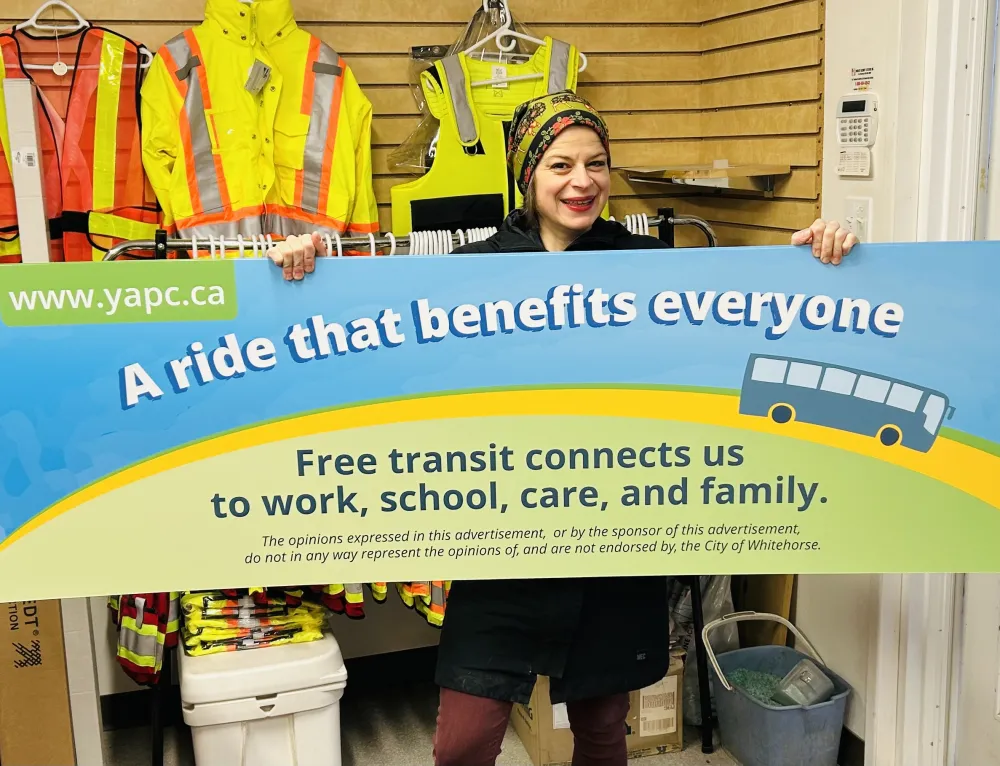
Helping people in Whitehorse access transit services has been a cornerstone of the Yukon Anti-Poverty Coalition since the very early days of promoting the phone number for the bus service infoline.
In 2003 and 2004, YAPC wrote letters to the editor and participated in City of Whitehorse consultations, calling for improved transit services to better meet the needs of youth, seniors and low-income families as well as transit subsidies to improve access.
With preparations for the 2007 Canada Winter Games, coalition member Doug Mowat and others advocated strongly for bus service to the new Canada Winter Games recreation centre and the future seniors residence at 600 College Road, again calling for reduced transit fares.
In 2012, YAPC raised bus service gaps and the cost of riding the bus as the top issue in a list of questions for candidates in the municipal election that year. The coalition emphasized that other jurisdictions provide free transit or reduced fares for low-income riders.
Over the decades, YAPC has consistently advocated with the City of Whitehorse and Yukon Government for bus routes that meet the needs of all citizens, affordable bus fares, rural transportation, bus safety and an accessible transit service.
Adopting the view that “free transit moves us all forward,” YAPC has called for a truly accessible Whitehorse transit system to create a healthier community, making it easier for everyone to get to work, health appointments, grocery stores and recreation.
Transportation regularly shows up in report recommendations for addressing poverty and improving quality of life for low-income households, urged in dozens of research projects since the 1990s.
YAPC advocacy helped push for a free transit program from mid 2023 to November 2025 that provided 13,000 monthly passes and 22,000 bus tickets to Yukoners. Many of these were distributed at the YAPC office, and other participating Whitehorse NGOs.
In spring 2025, YAPC suggested the Yukon Government and City of Whitehorse extend the free transit program to give more time to consider options like free transit after 6pm, free winter transit, and a pay-what-what you can model to help lift the burden of transportation costs on low-income people.
With the end of the program, in late 2025 YAPC initiated a petition calling for its reinstatement. Advocacy for the free transit program and improved bus service continues.
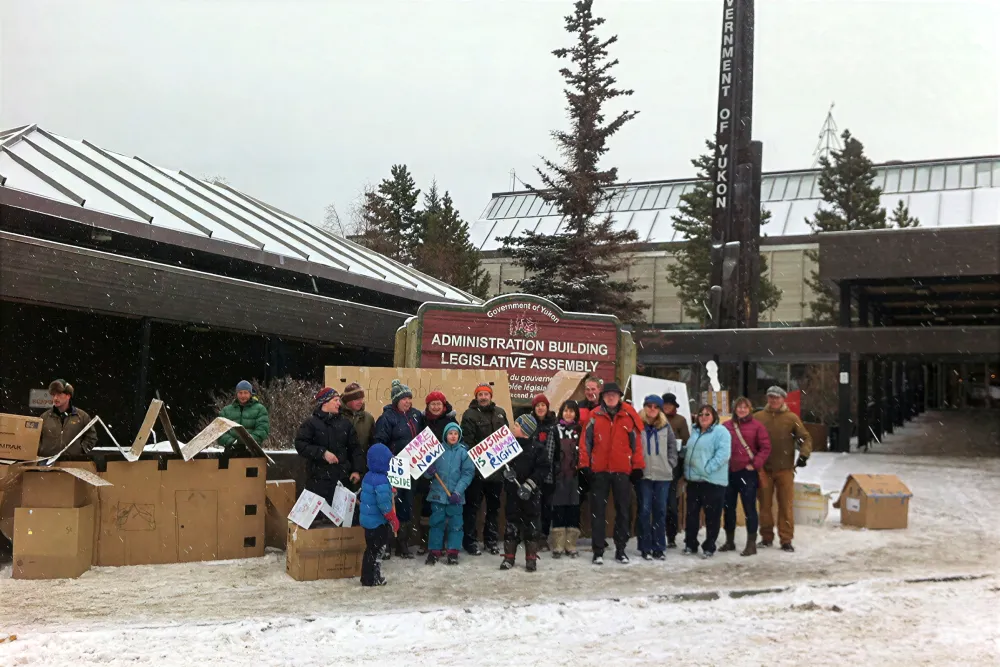
Every October, Yukoners are invited to learn more about nearby poverty and homelessness and to take action in response to cold facts.
From its start, the Yukon Anti-Poverty Coalition has worked to raise public awareness of these issues in concert with the October 16th World Food Day and October 17th International Day for the Eradication of Poverty.
In 2005 PHAW stood for ‘Poverty and Homelessness Awareness Week.’ In 2007 the name was changed to ‘Poverty and Homelessness Action Week’. The annual one-day event evolved into a week of events each year to bring attention to what is now called Poverty and Homelessness Accountability Week, or PHAW. The evolution of the name reflects how YAPC has matured its role in holding community decision-makers accountable for the facts and impacts of poverty in the Yukon.
Each year PHAW organizers create a variety of events and activities around a theme. The week has included ‘See For Yourself’ tours, ‘Take a Blanket/Leave a Blanket’ drives, collaborating with with local actors to feature plays focused on the theme of homelessness, meetings with and pledges from politicians, ‘Sleeping Rough’ events, community walks, speaker series, meals to build community, and more.
Some years there is a steering committee that starts planning in June. Some years there is a lone staff person organizing a smaller scale event. The range reflects the fluctuating capacities of the organization in its responses to community need.
YAPC Executive Director Kristina Craig remembers that in the early years the organizers would invite people from outside the territory with expertise and innovative approaches to homelessness, housing, food security and other issues. She notes that changed during the past decade, because there is now a great deal of expertise and experience to draw from within the Yukon community and less reliance on people from outside the territory.
Over the years, PHAW steering committees have shared the organizing role with students and clients of a range of social service organizations to create grassroots events with broad appeal.
PHAW has grown to include activities sponsored by a wide cross section of organizations, individuals, businesses, churches, schools and the media.
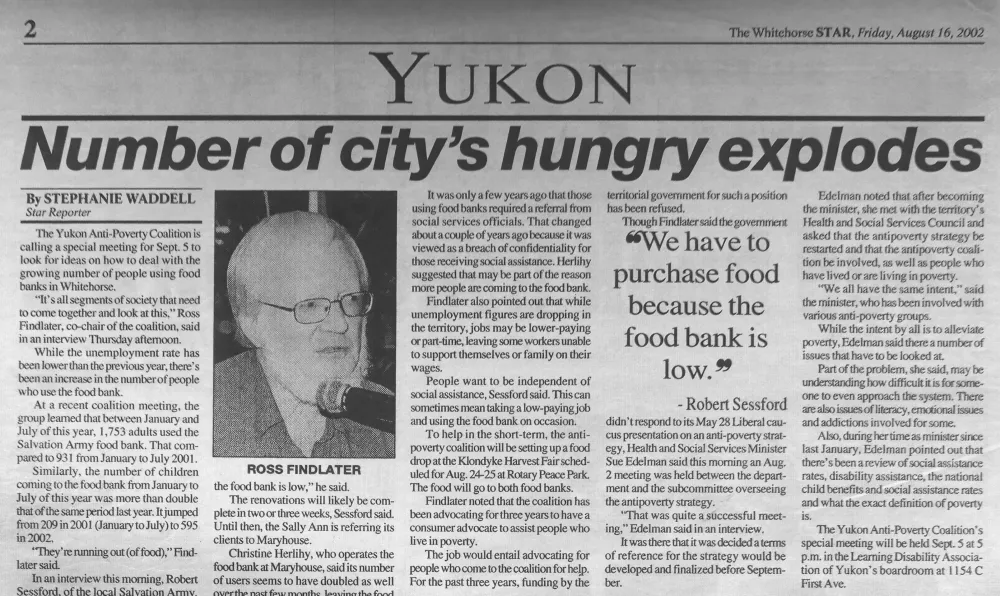
Access to food has always been a major topic for the Yukon Anti-Poverty Coalition.
From the beginning, Coalition members were active in volunteering at various soup kitchens in town, donating what they could, sharing information about food programs and raising public awareness of people who need access to food.
In 2003, YAPC worked with the City of Whitehorse to create and distribute Food Coupons – a $2 coupon located at the tills of the local grocery stores that customers could buy when checking out, with the cash donated to local soup kitchens. YAPC made a point of publicly recognizing the stores (SuperValu/Food Fair and others) and their customers that bought the coupons.
However, soup kitchens and church-run food banks were only a partial response to people who needed food. In September 2002, YAPC hosted a public meeting to discuss a noticeable upturn in people accessing food programs and ways to fill the gaps. Over the next few years, the Coalition engaged in consultations, lobbying and feasibility studies towards developing a central food bank that was open to anyone who needed food.
As a result of Coalition work, the Whitehorse Food Bank Society was formed in late 2007, eventually opening its doors to the public in 2009.
During the early days of researching responses to the need for emergency food, YAPC co-chairs George Green and Ross Findlater went to various other food banks around Alaska and southern Canada to get a sense of what was working and what wasn’t.
They learned that successful food banks felt income testing was a waste of time, and that it creates unnecessary shame. When people are in need of food, it is an essential resource that should be provided, no questions asked. They also learned that the idea of mass groups of people exploiting the food bank is a myth.
During the 2020 pandemic the Whitehorse Food Bank began shipping hampers to communities throughout the Yukon and in northern B.C.
In 2022 it officially changed its name to the Food Bank Society of the Yukon. The organization provides northerners with more than 500,000 meals a year.

The Yukon Anti-Poverty Coalition helped keep people safe, and increased the availability of social housing, during and after the 2007 Canada Winter Games.
During the planning for the Games, YAPC expressed concern that people housed in hotels through social assistance arrangements would be forced to vacate their homes. The coalition advocated and lobbied for the right of people to stay in their homes.
Working with the Canada Winter Games Host Society, the City of Whitehorse, Yukon Government, and hotels, coalition members helped develop a plan that included hotel rooms for some people, new warming places and extended hours where people could go 24/7 during the Games to stay safe in cold March temperatures, and increased services (hours and supplies) for the Outreach Van program.
An outpouring of volunteers also cooked and distributed food during this time.
With a focus on social housing, YAPC lobbying helped shape the decision to turn some of the athletes’ housing into Yukon Housing units for seniors after the Games.
One of the athlete housing buildings cost $20 million to construct and resulted in 48 apartment units that are still housing older Yukoners.
The other building still provides student housing and office space for Yukon University.
Former YAPC co-chair George Green was active on the team that pushed to protect people during the Games.
As George said in an interview “It’s been a real team effort, it’s been very encouraging actually, because it just demonstrates yet again — what we’re unable to do individually, it’s easy to do collectively,” said Green.
“Together we really do things better.” (Yukon News, Feb 17, 2007)
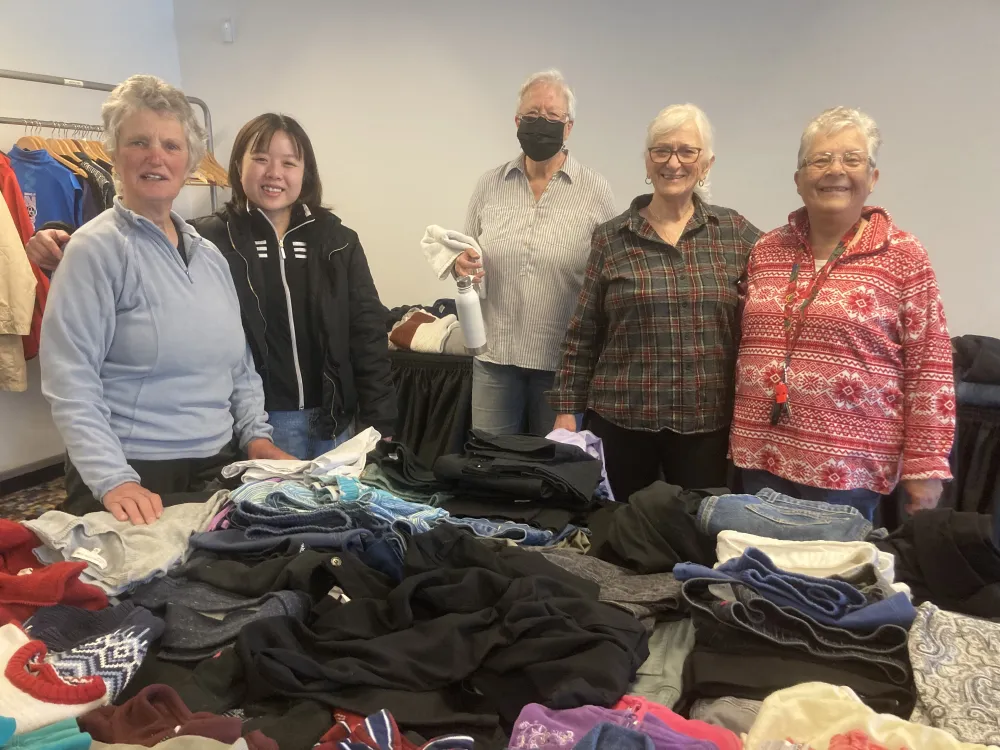
Whitehorse Connects is one of the most heartwarming and popular outcomes of YAPC’s commitment to community.
Three times a year, people connect with local musicians, hairdressers, cooks, social service providers, photographers and volunteers to access information, food, music, personal services, donated clothing and more at a day-long event.
The first Whitehorse Connects was held as part of Poverty and Homelessness Action Week in October 2008. The event was inspired by similar events held in San Francisco and Vancouver (Project Homeless Connects) where businesses, non-profit organizations and government departments offer free goods and services to the homeless.
Former organizer Kim Winnicky explained that for the first event, YAPC rented space on Strickland Street (currently the Whitehorse Food Bank) and collaborated with a number of organizations that agreed to provide services. They were unsure if anyone would attend, but over 180 people showed up on that first Connects Day, and many guests expressed how grateful they were to have a non-judgmental space to just be for the day.
Just a few of hundreds of comments from guests over the years reflect the experience:
I really liked the people, very friendly and helpful, I really liked the music and the tasty lunch, great atmosphere.
People getting together to socialize in a respectful and trusted gathering place.
I got my blood pressure checked after 20 years.
The vibes! Everyone is so kind and welcoming!
Nice free clothes. Help with taxes.
Beautiful event coming together as walking with, not without.
Community, Free Clothes, free picture, FOOD.
Whitehorse Connects is far more than the services offered. It is community at its best. All are welcome, and the event usually attracts over 250 people.
Since 2008, over 100 businesses and organizations have supported Whitehorse Connects with in-kind or financial support. The event has welcomed volunteers from high schools, seniors’ residences, the business community, all levels of government and the community at large.
During the pandemic restrictions, YAPC offered virtual Connects events. The community has taken part in 55 events from 2008 to 2026 with an average of 20 volunteers helping at each event.
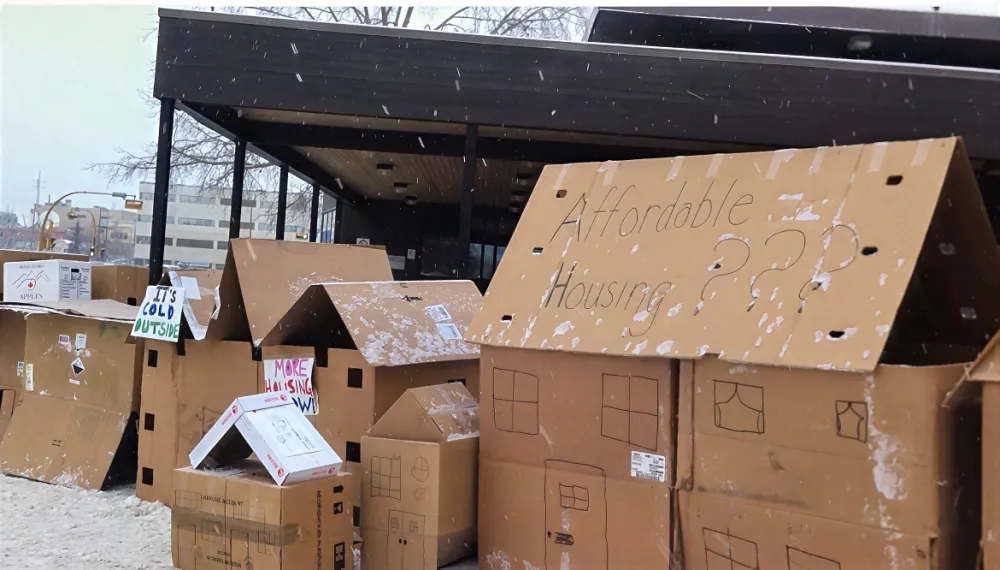
Access to safe, adequate and affordable housing has been an issue for the Yukon Anti-Poverty Coalition since its beginning.
From the start, Coalition agencies had been tracking and researching various aspects of their clients’ housing challenges and trying to support unhoused or inadequately housed people in the community.
One early collaboration included the efforts of Coalition member Todd Hardy and others, who established Habitat for Humanity Yukon in 2004. That spin-off organization built 26 homes in Whitehorse during the period 2004-2026.
In 2008, YAPC began to see a significant rise in the number of people with low incomes (fixed or otherwise) who were struggling to find appropriate, affordable and adequate housing.
During PHAW week in October, Bill Thomas and other community members took turns sleeping in an unheated van in -15C overnight. That experience provoked them to action.
A leader within the Coalition, Bill along with what became about 50 YAPC members, worked together to create a Housing Task Force.
The group has been a true force for change in the community. Over the decades, the efforts of the Housing Task Force seeded a range of projects with many positive spin-offs.
Some of these outcomes are described in more detail on our website, but include:
2011 Housing Action Plan for Whitehorse and subsequent progress reports
2013 start of landlord and tenant education projects
2016 creation of a 2-year YAPC Housing Navigator position
Read many other stories of YAPC engagement and action around housing issues in the YAPC timeline.
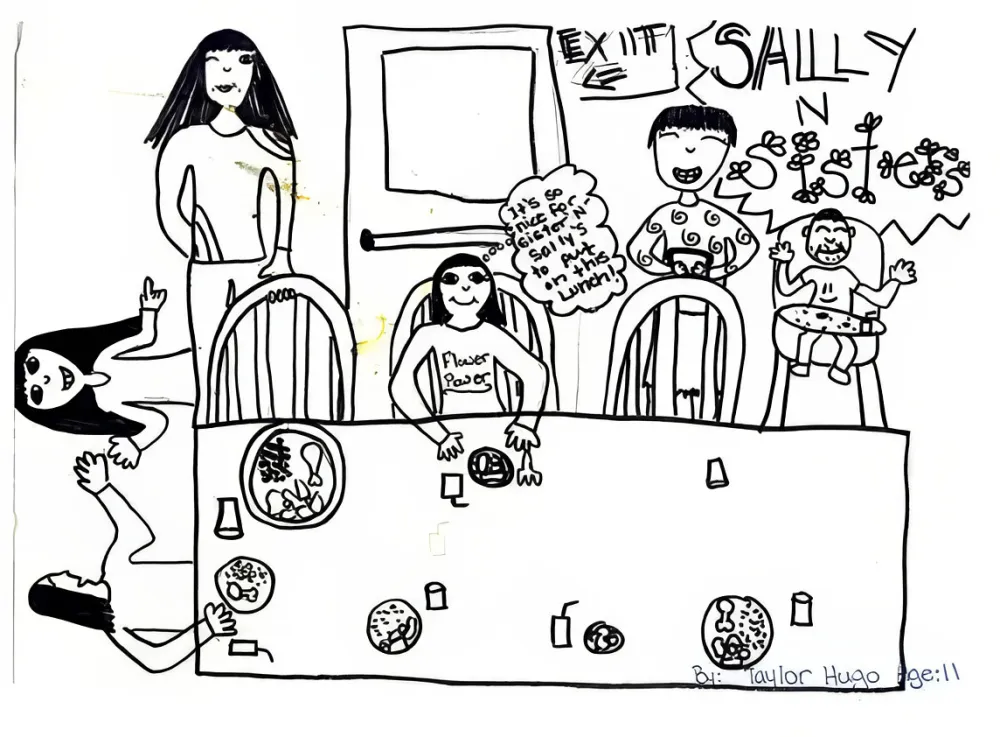
In a monthly meeting of the Yukon Anti-Poverty Coalition during 2009-2010, people learned that women and children were not feeling comfortable or safe eating at the co-ed Salvation Army soup kitchen.
A coalition of “Sisters/Soeurs” - women from the Yukon Anti-Poverty Coalition, Victoria Faulkner Women’s Centre, LesEssentiElles, Whitehorse Food Bank, and Whitehorse Aboriginal Women’s Circle - teamed up with “Sally” (the Salvation Army) to provide a lunch program for women and children to eat in a welcoming, safe and sober environment.
Together they applied for funding from United Way Yukon to pilot a program with a part-time coordinator, combining meals from the Salvation Army with space at the Whitehorse Food Bank.
The “Sally and Sisters” lunch program received consistently high levels of client satisfaction feedback in YAPC evaluation projects undertaken in 2011, 2015, and 2018.
Women attending the program appreciate the welcoming approach of staff and volunteers, and have commented on the quieter experience as compared to co-ed programs; most feel safer at Sally and Sisters. They are glad that children can attend and that the space includes highchairs and other supports for young ones.
Participants also appreciate the chance to share stories and information in informal peer support networks. Over the years the program has also included guest speakers and connections with many different service providers.
Sally and Sisters got its start when someone spoke up at a YAPC monthly meeting where everyone is welcome to attend. The program is currently hosted by the Yukon Aboriginal Women’s Council with funding from the Yukon Government.
Illustration by Taylor Hugo, courtesy of the Yukon News.
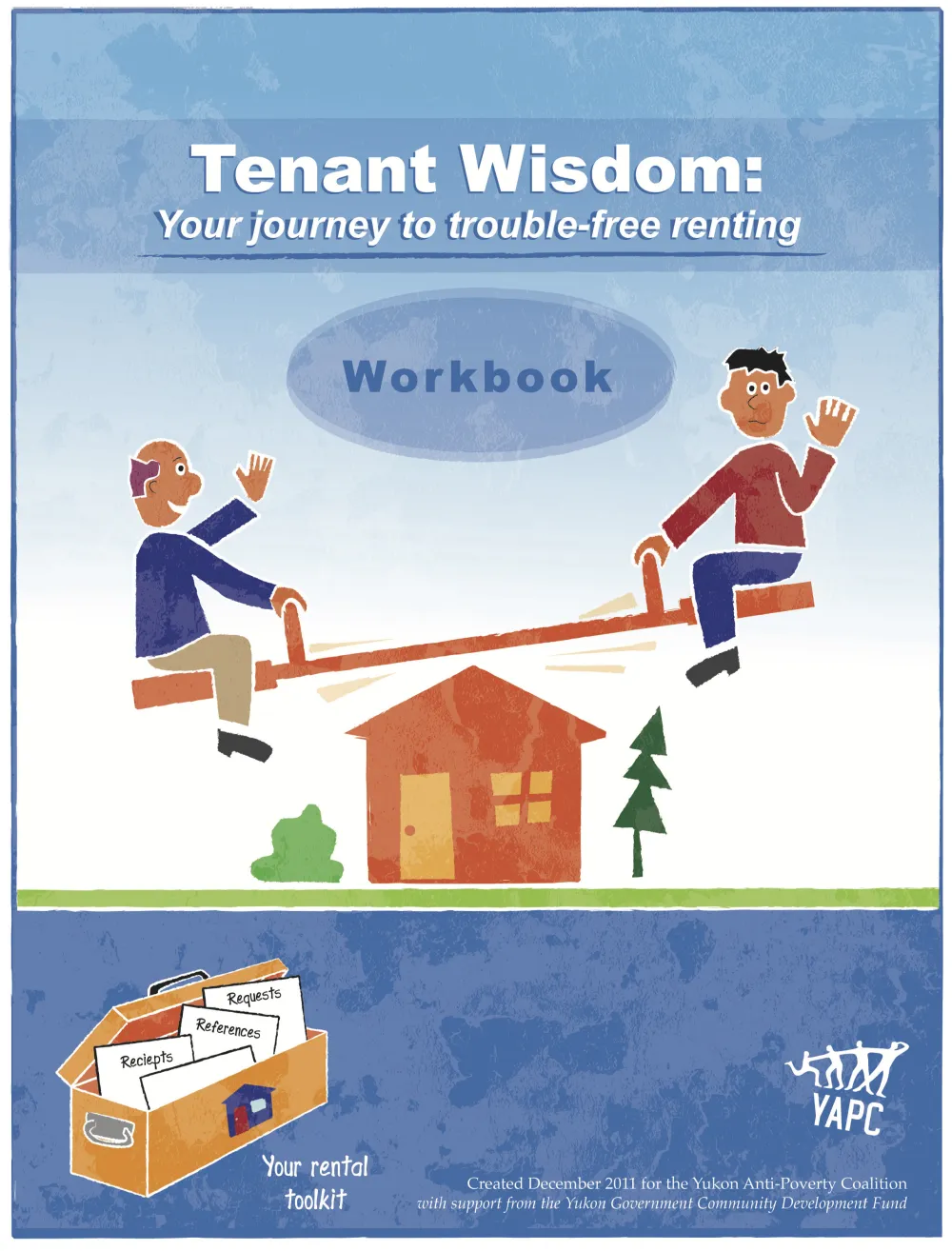
The Yukon Anti-Poverty Coalition has always been committed to improving housing for people affected by poverty and homelessness.
One aspect of helping people maintain their housing includes access to information and skill-building about tenant rights and responsibilities.
In 2011, YAPC coordinated the first Tenant Wisdom curriculum, designed to help social service organizations run workshops to engage tenants in learning opportunities. The initial curriculum included an instructor guide, participant workbook, and PowerPoint presentations with film clips.
Topics covered by the workshops include searching for housing and preparing to meet a landlord, tenant rights, conflict resolution, problem-solving, and practical information about tenancy agreements and move-out responsibilities.
In 2016, YAPC managed a contract to create a revised version of Tenant Wisdom in partnership with Yukon Housing to help share this information with their tenants.
Blood Ties Four Directions Centre continues to offer Tenant Wisdom education as workshops and trivia games with their clients. The material is open-source and several Yukon organizations use elements of the resources to support their clients’ housing needs.
YAPC has also consistently promoted the need for landlord awareness and training to support tenants with their housing needs. These efforts have included research into RentWell programs and potential HomeLink programs for the Yukon.
In October 2009, YAPC invited Dr. Bernie Pauly from the University of Victoria to speak in Whitehorse as part of Poverty and Homelessness Action Week. Her advice? Develop a local housing plan or strategy to harness the good ideas and experience of the community. A plan would help focus attention on and connections for the actions required to meet housing needs.
The Coalition’s new Housing Task Force held a one-day workshop in December 2009 with NGOs to identify housing gaps and the needs of our community.
In the spring of 2010, YAPC received project funding from the Affordability and Choice Today (ACT) Fund. YAPC undertook community-based research to document across a range of housing needs, and to examine structural barriers to housing. More than 60 participants took part in workshops to facilitate community input.
In February 2011, YAPC launched A Home for Everyone: A Housing Action Plan for Whitehorse. The plan laid out a five-part housing spectrum: emergency shelter, transitional housing, housing with long-term support, rental housing and affordable home ownership.
The plan also referenced 13 Yukon-relevant research reports that were undertaken in the period 2005-2010, with the message that it was time for action, not more studies.
It also provided recommendations for coordinated decision-making between the many organizations involved in housing issues and social service provision.
YAPC undertook a review in 2013 that showed about half of the original recommendations had been undertaken to some degree.
In 2021, during the pandemic, YAPC published A Home for Everyone: A Ten-Year Progress Report, describing urgent action items that were still necessary, as well as reporting on progress made and new initiatives.
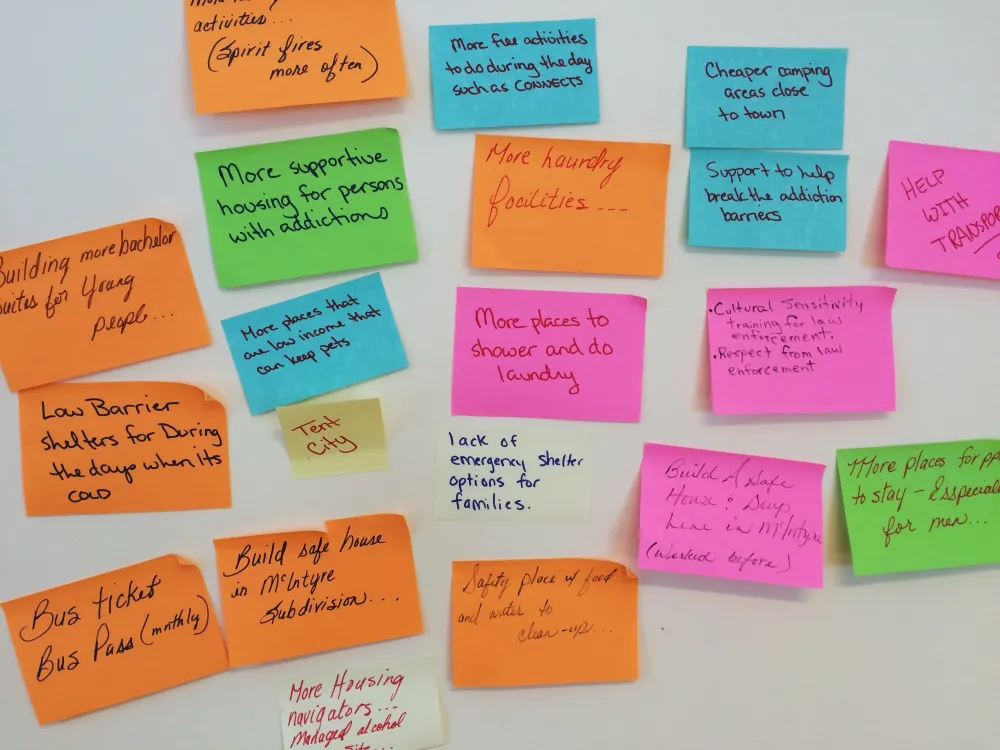
Reducing Yukon poverty has been a core focus of the Yukon Anti-Poverty Coalition since it began.
One of the first advocacy projects of the coalition was to work with the Yukon Government to create an interdepartmental Anti-Poverty Strategy, which was released in August 1998. Subtitled “Fostering Healthy Communities,” it reinforced the 1997-2000 Action Agenda and outlined six core strategies, linking them to specific government programs and identifying departmental leads.
YAPC has long been aware that poverty is not simply a money problem, but a spectrum of factors that exclude people from fully participating in society.
One example of YAPC’s commitment to social inclusion is that coalition members supported a push for the 1999 creation of the Yukon government’s Kids Recreation Fund, to help children from low-income families access up to $500 per year to participate in sports, arts and recreational activities that otherwise they would not be able to attend.
With the change in government in 2000, the Coalition and co-chair Ross Findlater continued to advocate for reducing Yukon poverty. A presentation to the government caucus in May 2002 made the case for creating a public commission/committee to oversee the creation of “a comprehensive Anti-Poverty Strategy to lead to a measurable and sustainable decline in Yukon poverty.” Follow-up media coverage later in 2002 indicated that the government had not responded to the presentation.
Change takes time, but it also takes persistent action.
Ross and YAPC did not give up, and in 2009 the Yukon government announced it would work with community organizations to create a social inclusion strategy.
In spring 2010, facilitated consultations in rural Yukon and Whitehorse brought together members of the public, front-line government social service workers and people from the NGO sector to share “hard-truth accounts and observations” as qualitative evidence of needs and gaps in service.
This evidence was compiled in the Bridges and Barriers Report 2010, one of several reports supporting development of a Yukon social inclusion strategy. Key findings included evidence that systemic barriers can impede access to services, housing and transportation/location are priority issues, and an inclusive approach makes a difference to the people who access services.
In 2012 the government released, “A Better Yukon for All: Government of Yukon’s Social Inclusion and Poverty Reduction Strategy.” It emphasized the importance of collecting data and consulting with stakeholders, in order to put community data and input at the core of creating changes to reduce Yukon poverty and social exclusion. Unfortunately the good intent behind the strategy did not result in focussed action.
To this day, YAPC continues to conduct independent tracking of Yukon poverty statistics and releases periodic report cards and action plans to hold governments and decision-makers accountable.
A significant gap in housing to meet the needs of single mothers and their children provoked the construction of 60 Selkirk St, a group of four Yukon Housing Corporation apartment buildings in the Riverdale neighbourhood designated for families.
After the building was opened in 2010, Yukon Housing was delivering a drop-in space for families to have access to various supports. Over time it became apparent that tenants needed more separation between the landlord (Yukon Housing Corporation) and the drop-in space.
In 2015, YAPC began delivering drop-in programming, with support from agencies who were a part of the YAPC Housing Task Force (Victoria Faulkner Women’s Centre, Skookum Jim Friendship Centre, Many Rivers, and Blood Ties Four Directions Centre). The staff helped create a safe space where tenants could talk about their lives without worrying if there was an eviction on the horizon.
The YAPC team has worked tirelessly to help build a shared sense of community among residents and provide a place where people can go to relax, have their kids play, garden, share a meal and seek support.
Key goals of the program include empowering parents and children by addressing specific needs such as after-school programming, and fostering trust within the community. A coordinator and assistants deliver programming two-three days a week, including craft activities, workshops, and food-related events.
YAPC continues delivering the Whitehorse Affordable Family Housing program with support from the Yukon government’s Women and Gender Equity Directorate and the Yukon Housing Corporation.
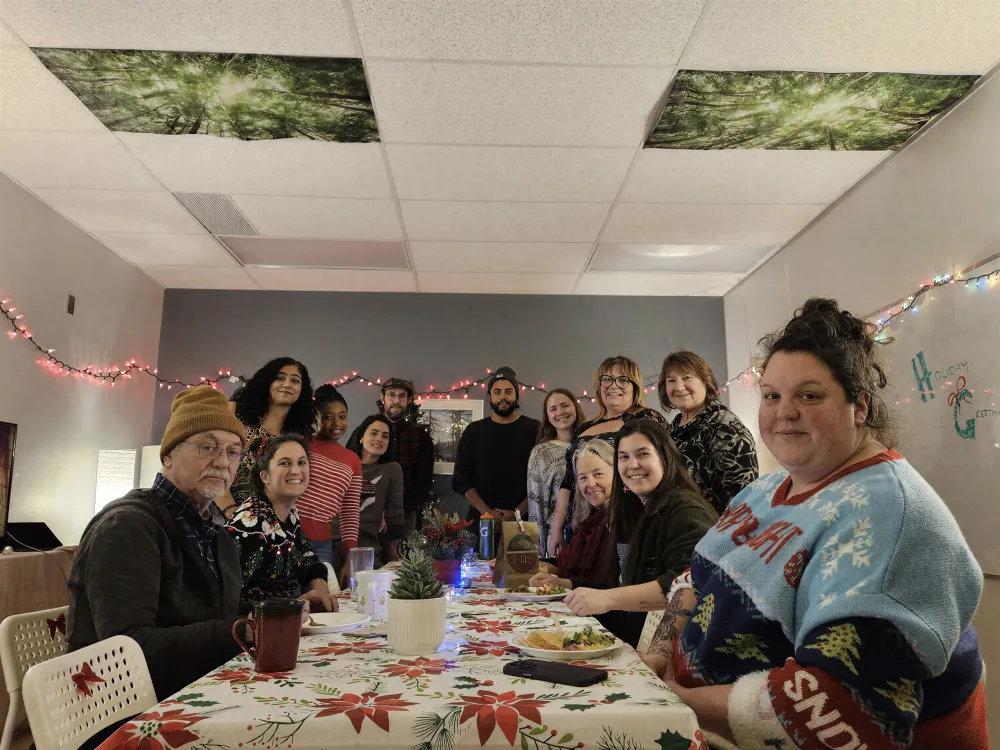
Welcoming has been at the heart of YAPC’s approach since it began.
Back in the 1990s, coping with mental health challenges, or advocating for better mental health services, meant confronting much more social stigma and isolation than in Yukon society today.
YAPC was the incubator for a revitalized Yukon Mental Health Association, which later aligned with the Canadian Mental Health Association as their Yukon branch.
Coalition members who were experiencing gaps in mental health services for themselves, for family members and/or for clients formed a Mental Health Task Force in 2010 with support from YAPC staff.
As the group began foundational work to create their own society and governance board, YAPC offered expertise and encouragement. In the words of one early CMHA Yukon board member, “YAPC was our big sister.”
By 2014, CMHA Yukon was offering public awareness campaigns and mental health workshops like “Living Life to the Fullest,” which could be tailored to specific demographics in the community (youth, Elders, mothers and others).
In 2019, the Yukon government approached CMHA Yukon to suggest the organization expand its services to include 1:1 counselling. At that point they did not have counselling staff or sufficient office space, but they pivoted rapidly.
CMHA Yukon now serves Yukoners with counselling, the Reach Out Support Line, the 988 suicide prevention line, workplace mental health workshops and peer support networks, and a wide range of other services.
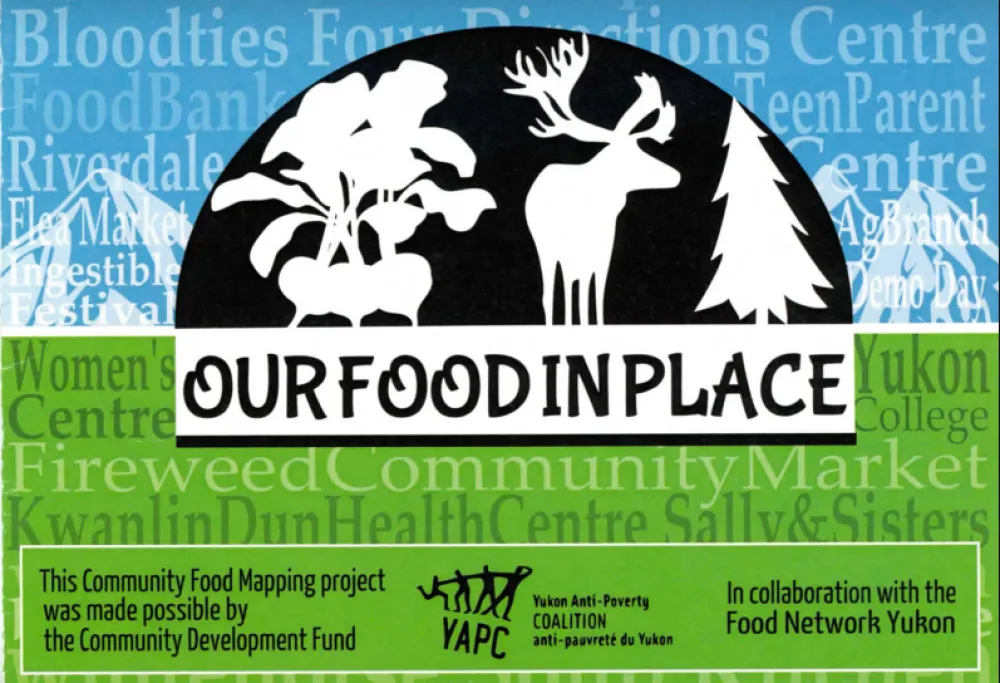
Since its beginnings, the Yukon Anti-Poverty Coalition has been engaged in advocacy around issues of hunger and access to food.
In 2012 YAPC facilitated a series of community forums called “Let’s Talk About Food Security,” and the connections made through that project evolved into a network. Initially it was called the Food Network Yukon and supported by the Arctic Institute of Community-Based Research (AICBR).
In 2015, YAPC received support from the Yukon government’s Community Development Fund to help understand gaps and potential solutions for a more food-secure Yukon.
The project conducted workshops with 12 community organizations and heard from over 350 people about the strengths and challenges of good food access in Whitehorse.
It resulted in a significant blueprint called Our Food in Place, which has seeded a range of Yukon food-related initiatives since that time.
Project participants identified barriers to healthy food access, including:
The report’s recommendations covered a range of perspectives, from specific suggestions for collaborations to provide sandwiches on the Outreach Van through to connections with Living Wage research and implementation. An overview of recommendations grouped them as:
While barriers to healthy food access continue to impact the Yukon community, it is also hopeful to see that since 2015 many new programs and grassroots ventures reflect these recommendations.
In May 2015, YAPC co-chair Bill Thomas went to Ottawa to take part in a Living Wage Leaders gathering. He came home bolstered by encouragement and ideas to start a living wage initiative in Whitehorse.
Bill called it ‘serendipity’ that public policy researcher Kendall Hammond reached out to YAPC that same year with a proposal to research and calculate a Yukon living wage.
The living wage is now calculated differently for single people, households with two parents, and single-parent households.
It is a tool that demonstrates the strong link between policy choices and economic effects… for example, in places where childcare or public transit is subsidized or free, the necessary living wage paid by employers can be lower.
The first Living Wage calculated for Whitehorse in 2016 was for a two-parent household with two children, and a per-adult rate of $19.12 per hour. In April 2016, the minimum wage was $11.07 per hour.
In 2025, the same household required a per-adult rate of $25.91 per hour, with the minimum wage rate sitting at $18.51 per hour.
The Living Wage calculations continue to be an important part of YAPC’s public advocacy work.
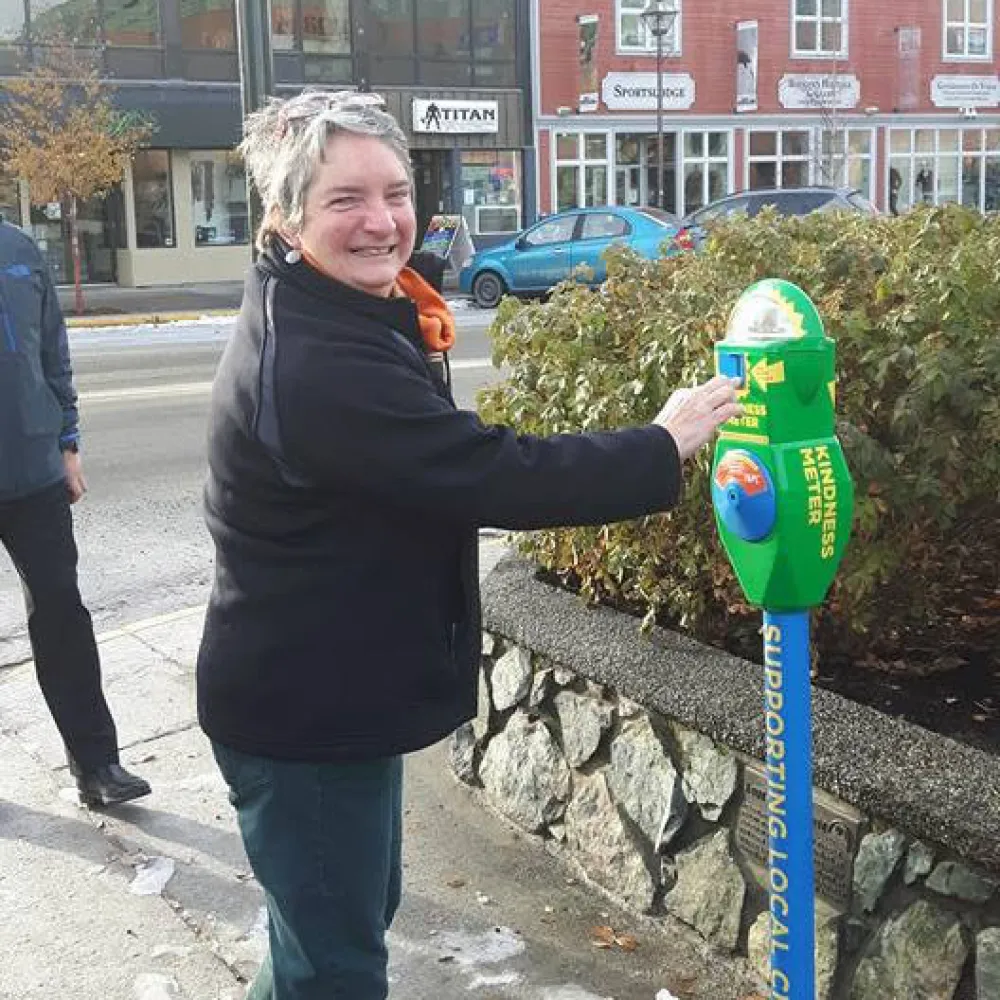
Around 2015, Michael Hougen came to the YAPC monthly meeting with an idea for making a difference.
He’d seen a “Kindness Meter” in Victoria and saw a benefit for Whitehorse.
In October 2016, YAPC and the City of Whitehorse installed a “Kindness Meter” at the corner of Main Street and Third Avenue.
The Kindness Meter helps raise awareness of the importance of generosity and small acts of kindness, inviting people to put coins in the meter.
During its first year of operation, the meter raised $1,300 in coins to support coalition activities such as Whitehorse Connects and Poverty and Homelessness Accountability Week, and YAPC has received donations from the meter each year since then. The coins are delivered to the Coalition by partner organization FASSY (Fetal Alcohol Syndrome Society of Yukon).
School groups and families have benefitted from the opportunity to teach children about sharing resources with people who need them. The tangible, colourful meter is a hands-on way for children and all citizens to experience ‘making a difference.’
YAPC has also used the Kindness Meter as a gathering point for public awareness events such as National Housing Day or other dates connected to poverty and homelessness.
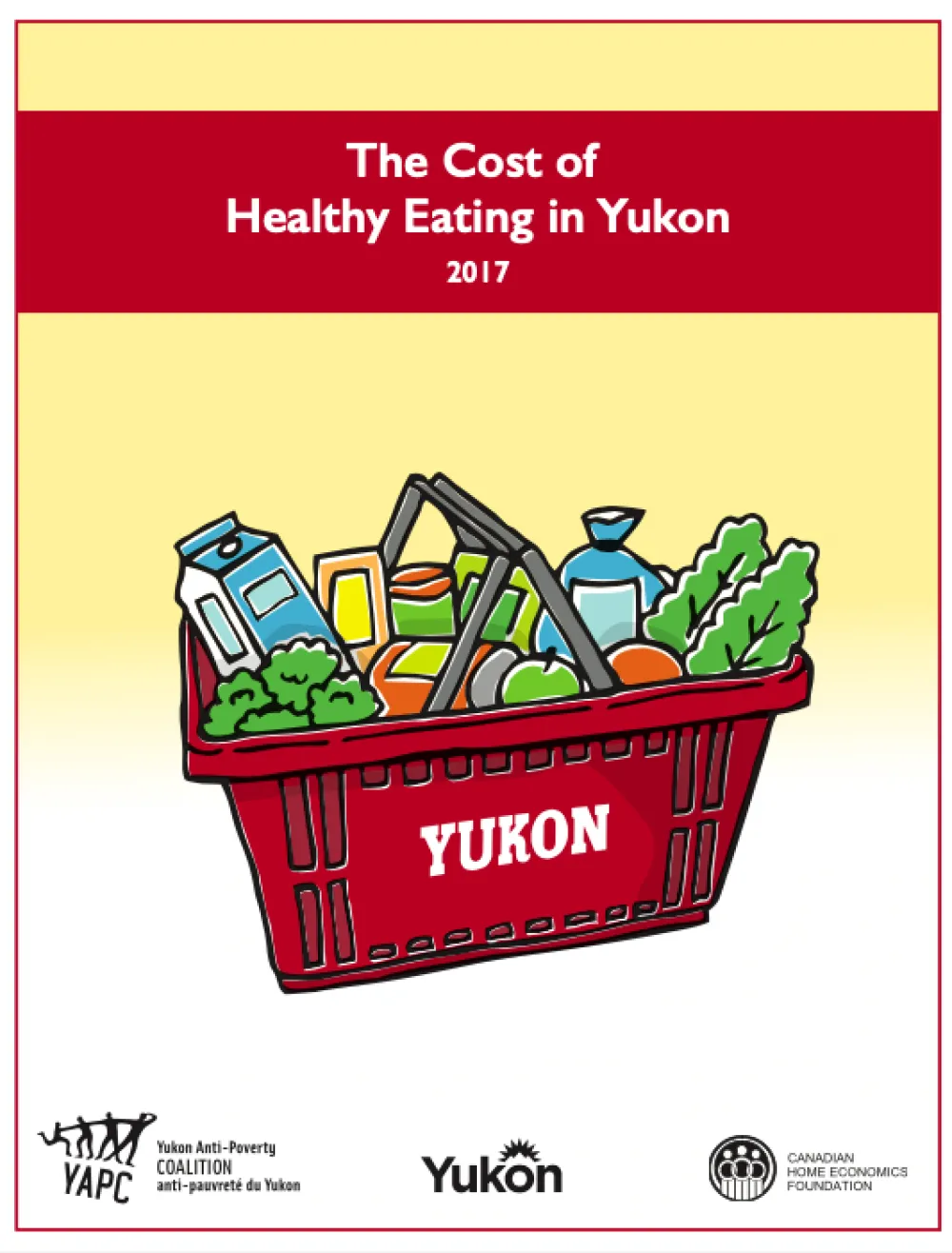
It’s hard to advocate for food subsidies and adequate social supports when you don’t know how much food costs in Yukon communities.
Leading up to 2017, the Yukon Anti-Poverty Coalition/Food Network Yukon set out to learn the actual cost of healthy eating in the Yukon. Working with the Yukon government department of Health and Social Services, YAPC contracted a research team to collect data regarding the availability and quality of food across Yukon communities.
The research project included a training component to support community researchers from each Yukon community to collect Revised Northern Food Basket (RNFB) price data and record the lowest cost item in preferred purchase size regardless of brand. Retailers were informed in advance with a joint letter from the research team and the ADM of Health and Social Services explaining the purpose of the project and data collection dates.
The project demonstrated that community research is valuable and works well. The data revealed stark differences in food prices between communities, with food prices in Old Crow recorded as 58% higher than Whitehorse prices. These findings were presented at a community forum in October 2017 that included input from some of the 22 community researchers.
The final report, Cost of Healthy Eating in Yukon (2017), contained 7 key recommendations as well as detailed pricing data.
It also created a baseline for future monitoring of food pricing data to support advocacy for a food secure Yukon.
Community feedback included the importance of expanding data collection to include traditional food harvesting, to include traditional knowledge and monitor access to ‘healthy eating’ not included in the RNFB.
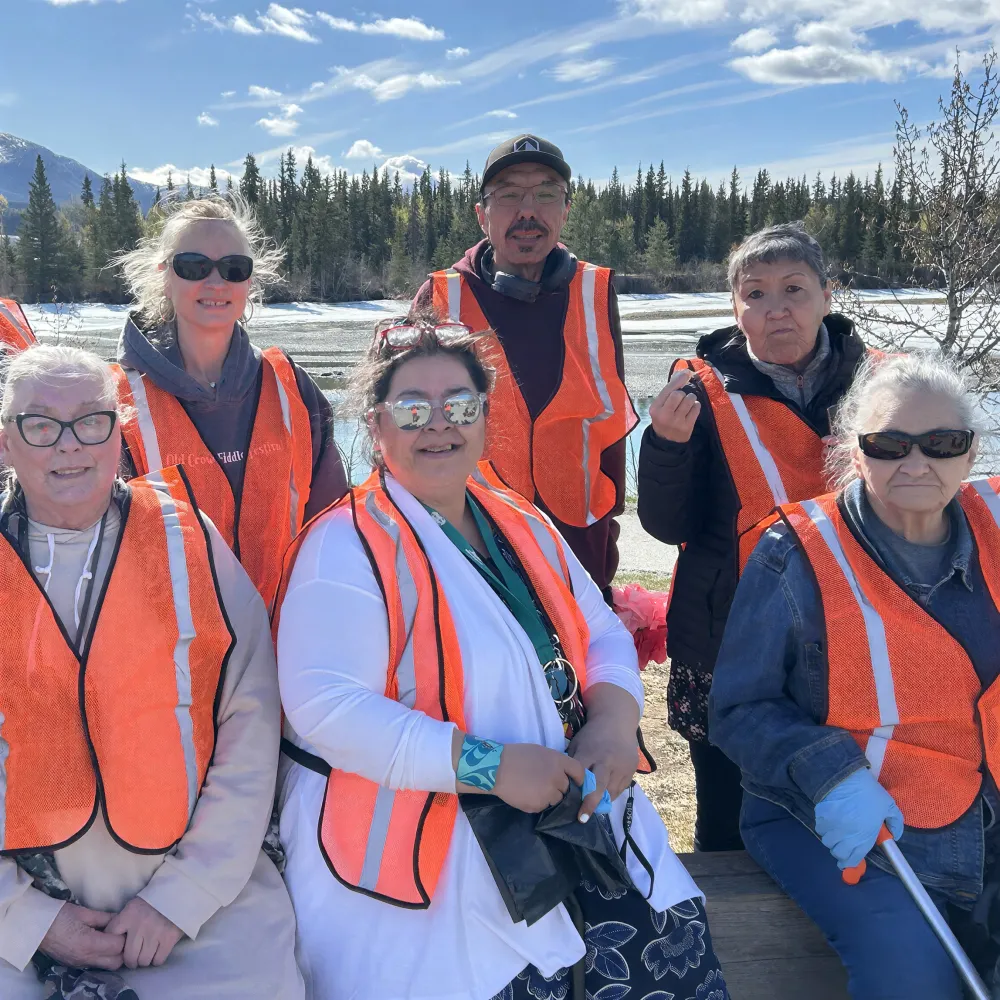
The heart of the Yukon Anti-Poverty Coalition has always been the people who have the courage to notice and speak up for what is missing.
In 2017, Jack Bogaard and members of YAPC were at the table helping create the Safe At Home plan to end homelessness alongside First Nation, Yukon and City government representatives. Jack felt alone and recognized how hard it was for some of the others to hear and understand street experience, and how important it would be to have more voices at the table.
Jack and YAPC created a program that provides leadership training, advocacy opportunities and peer support to participants who are willing to explore and share their life stories and lived experience.
The 10-session course was developed by Raventree Consulting and is delivered by Maureen Johnstone and a co-facilitator with lived experience. Over 40 people have completed the training.
Voices Influencing Change is more than a training program - it’s a safe space that fosters resilience and empowerment. Participants bring street issues to the table, and are the faces of social justice issues.
These members take on a range of advocacy and supportive roles in grassroots community settings, and a core group meets twice a month to support each other in action around themes of advocacy, community building and empowerment.
They have met with government ministers on advocacy issues, participated in local and national roundtables and seminars to share their experiences, shared their stories with the media to help destigmatize homelessness and poverty.
In July 2026, Voices Influencing Change published a much-needed Map of Public Washrooms in downtown Whitehorse.
Their faces, stories and advocacy efforts are shared in the Voices Influencing Change Booklet, and their work continues to be a vital and energizing element of the coalition.
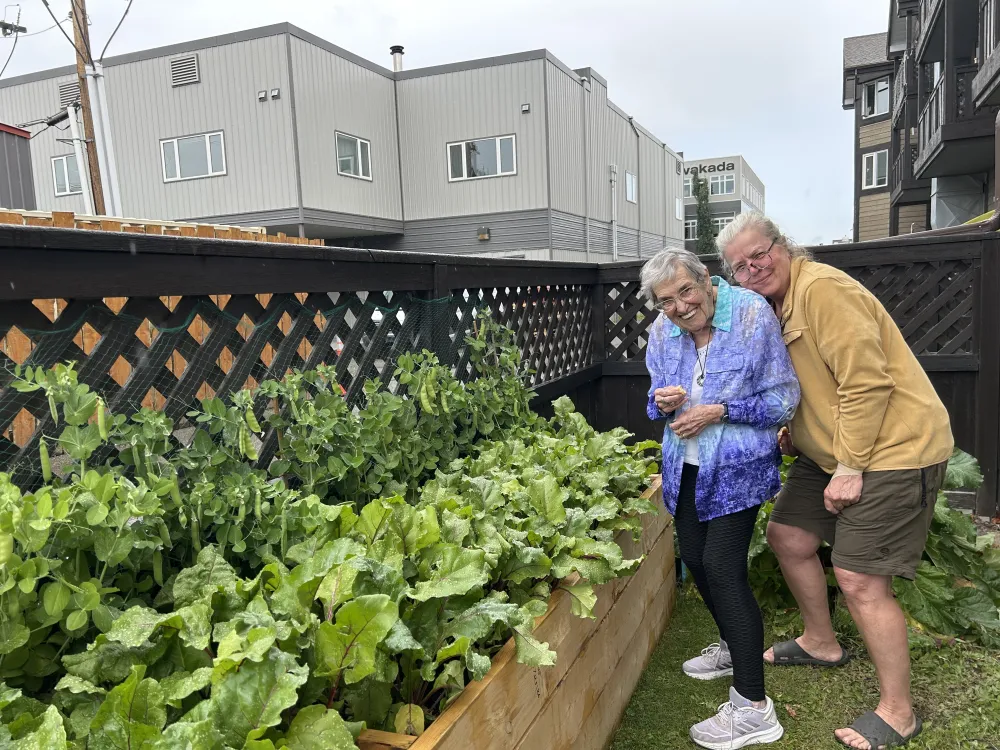
Since early days, the Yukon Anti-Poverty Coalition has learned to be flexible when things “go sideways.” The Seniors Engagement Program evolved from a 2017 Men Can Cook program aimed at single dads. When no-one showed up, YAPC asked the funder if the pilot project could be offered to men living in Yukon Housing seniors’ residences.
Some seniors were keen, and some women in the residence wanted programming too. After a few versions of the meal programs, in 2019 Yukon Housing asked YAPC to create and provide a 6-month pilot project to engage seniors living in six buildings, to build community, increase housing safety, and connect tenants with one another.
When the pandemic set in, the programming became an outdoor tailgate service, dropping off food and supplies and checking in with tenants on the curb.
When restrictions were lifted, the program expanded to two staff who offered programs 3 days a week in 3 locations, with outreach for people in buildings where programming space was limited. Staff connect with at least 25 people each week.
The program includes crafts and games, meal support, tenant education and advocacy, guest speakers, and helping seniors connect with other service providers.
Seniors have enjoyed cribbage and chats over tea, creative time with wood burning, pottery making, felting, watercolours, and gardening in shared outdoor spaces.
The program hosts summer BBQs and a Christmas dinner, to build community within each residence as well as between all six buildings. Before the program started, many people did not know their neighbours’ names. New connections have introduced people to others in their buildings, and sparked reconnections between people who had known each other decades earlier and lost touch.
Program staff love hearing the stories of the seniors’ lives, and encourage them with writing programs and connections to family and friends.
The program helps boost housing security by supporting people with tenancy issues, and has many mental health benefits for the seniors who participate.
Hunger and access to food have been central issues to the Yukon Anti-Poverty Coalition since before it was even incorporated as a society.
One of the many harvests of this focus was the ultimate creation of the Yukon Food Security Network.
In 2016, YAPC participated on the Steering Committee for a research project by the Arctic Institute of Community-Based Research, resulting in Working Together Towards a Food Secure Yukon. These consultations involved more than 80 delegates from across the Yukon and Canadian universities, and helped strengthen a community vision for a food secure Yukon.
During the 2020 pandemic, Yukon Energy was looking for ways to support people through the economic impacts of the crisis. The Whitehorse Food Bank, United Way of Yukon and YAPC recommended a response that would help address the broader issues of food system security, especially in rural Yukon, beyond the immediate crisis.
Yukon Energy’s financial support was a catalyst to hire a coordinator to help create a more formal Yukon Food Security Network. The network has been guided by YAPC, the Food Bank Society of the Yukon, the former United Way Yukon, the Yukon First Nation Education Directorate, Yukon Agricultural Association and Yukon Energy.
The mandate of the network is to share concerns and exchange knowledge about growing and storing food, advocating for affordable access to food, and food security across the Yukon. The network has hosted conferences in Whitehorse and at the Tr’ondëk Hwëch’in farm.
In 2025, sharing the data from Yukon research and food service organizations became easier and more impactful with a Data Hub that shows meals served in the Yukon since 2014 and other relevant food security information.
The Yukon Food Security Network also maintains an updated list of current newsletters for the latest in network action.
The Yukon Anti-Poverty Coalition’s years-long commitment to helping people who don’t have adequate housing received a boost in 2015, when Kwanlin Dun First Nation Chief Doris Bill and Whitehorse Mayor Dan Curtis spearheaded a Vulnerable People At Risk forum and Business Roundtable to begin collaborating on finding better ways to support people experiencing homelessness.
A Working Group was formed out of this community input, co-chaired by YAPC and KDFN, made up of representatives with lived experience, Ta’an Kwa’chan Council, City of Whitehorse and Yukon government staff from both social service and economic/business perspectives.
After consulting with 200 people from a wide cross-section of the community, Safe At Home: A Community-Based Action Plan to end and prevent Homelessness in Whitehorse was launched in 2017.
The plan laid out 5 strategic priorities, each with goals, key actions and measures of success.
One of the recommendations of the plan was to hire an Implementation Manager who would be supported by a government partners committee. In 2018, YAPC hosted the position, to coordinate progress on the actions in the plan.
In July 2020, a progress report on the Safe at Home plan included revisions to the plan, the beginnings of a By-Name List (people consent to add their names to a list waiting for housing), new additions to the availability of supportive housing, improved coordination between service providers. The revised plan also called for a central organization to manage implementation.
By April 2021, the Safe at Home Society was operating as an independent non-profit society with its own board and three staff, having been nurtured in the “nest” of the YAPC organization before launching into flight.
As of spring 2026, Safe At Home plays a significant role in the coordination of access to housing, and has over 100 staff involved in housing managed by the organization, and in advocating for and supporting people at risk of homelessness.
In fall 2026, Safe At Home opened its doors to begin housing people at The Hearth.
YAPC and Safe At Home continue to collaborate on many areas of mutual concern and care.
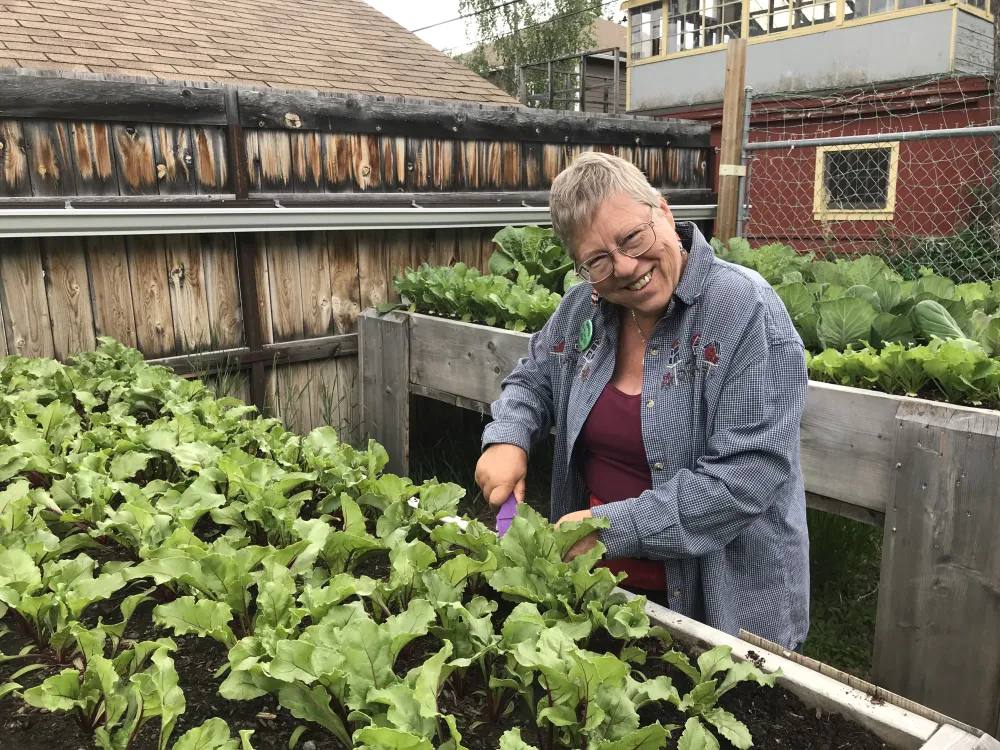
Growing food and growing community… these Yukon Anti-Poverty Coalition priorities come together in the Backyard Garden Project.
Beginning in 2020, during the pandemic, the outdoor space at YAPC’s Hanson St office became the site of much activity and learning together during a time of restricted indoor access.
Interested members of Voices Influencing Change worked with Master Gardener George Green and others to build and plant raised beds to grow food.
The program has expanded since then, now with eleven raised beds and a northern-designed “Bob Sharp” greenhouse with support from the Community Development Fund. Each year YAPC hires a program participant to act as the Program Coordinator to work with a gardener who provides technical advice.
All the gardeners work together on every aspect of food production and preservation, from soil preparation and planting right through to harvesting and pickling. And of course, celebrating their delicious accomplishments!
“Of all the projects I’ve been involved with, it’s the one that’s brought me the most joy,” George said. He says the growing season means weekly (at least) gatherings where the gardeners start with a check-in about how they are doing, then work in the garden together. After the day’s tasks are done, they share a meal together.
“It’s a wonderful team that supports each other. We’ve seen gardeners support each other on the hard days and celebrate the good days.” Green notes that it was very difficult for everyone when Program Coordinator Dianne Nolan died unexpectedly in 2025.
In 2026, YAPC renamed the backyard as the Dianne Kim Nolan Memorial Garden, dedicated to the beloved leader who nourished so many with food and a big heart.
Times have changed, and despite growing economic disparity, there’s been progress in creating safe housing for Yukoners.
Yukon Anti-Poverty Coalition members have been involved with various Government of Canada initiatives to combat poverty and homelessness for more than thirty years, including the National Homelessness Initiative and Homelessness Partnership Strategy (HPS). For ten years, YAPC chaired a Community Advisory Board to provide advice on priorities for local funding.
In 2019, the federal government launched their new Reaching Home: Canada’s Homelessness Strategy to reduce and prevent homelessness. After extensive community conversations in 2019, YAPC became the Community Entity responsible for administering funding, and currently oversees the 2024-2028 Reaching Home Community Plan.
Working with the guidance of the Community Advisory Board, and within the priorities set by the federal government, YAPC oversees the funded housing and client support projects.
Organizations delivering services supported by Reaching Home have included the Council of Yukon First Nations, Tr’ondëk Hwëch’in Government, Blood Ties Four Directions Centre, Yukon Women’s Transition Home Society and many others.
YAPC manages the Reaching Home program in the Yukon, and subcontracts some of the data collection requirements to the Safe At Home Society - for example, to keep up-to-date with the By-Name List of people experiencing homelessness.
YAPC has come a long way in thirty years - from one part-time coordinator in the beginning to a network of relationships between organizations that engage with many aspects of advocacy and care for people experiencing homelessness across the territory.
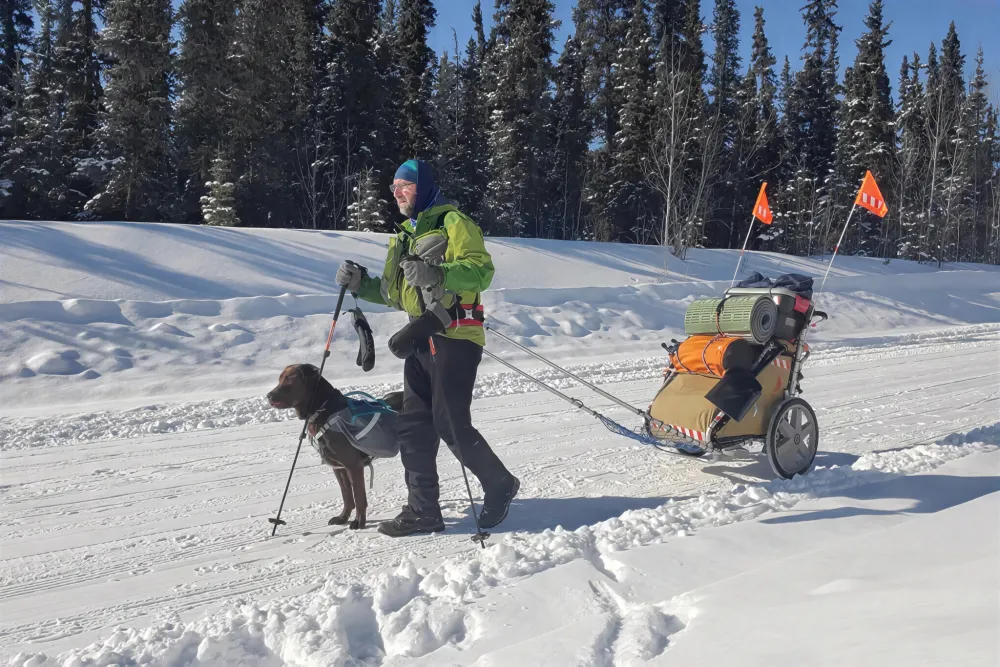
Patrick Jackson walks the talk.
He has proved his care for the Yukon Anti-Poverty Coalition literally one step at a time, walking thousands of kilometres to raise funds.
In April 2021, Patrick and his dog Dawson walked from the Dempster Corner to the Arctic Circle and his walk-a-thon raised $14,000 for YAPC projects.
On September 19, 2022 he left Dawson City for an even longer trek, walking 531 km to Whitehorse. His steady commitment, literally one step at a time, raised over $11,000 by the time he arrived home to Whitehorse on October 14.
And on August 31, 2024, Patrick and his friend Richard Laurence, along with Patrick’s dog Bennie, began their 200 km trek along the remote Nahanni Range Road. This third walk raised almost $16,000 to benefit the Voices Influencing Change program.
YAPC co-founder Michael Dougherty often says that change is slow and takes time, and a walk-a-thon embodies that idea perfectly – step by step, change happens.
Patrick’s first contributions to YAPC came in the early 2000s when he was owner of the Changing Gear used sporting goods store. Each year he donated unsold clothing and footwear for YAPC members to use. Patrick continues to contribute his time as a volunteer board member helping with governance of the YAPC organization.
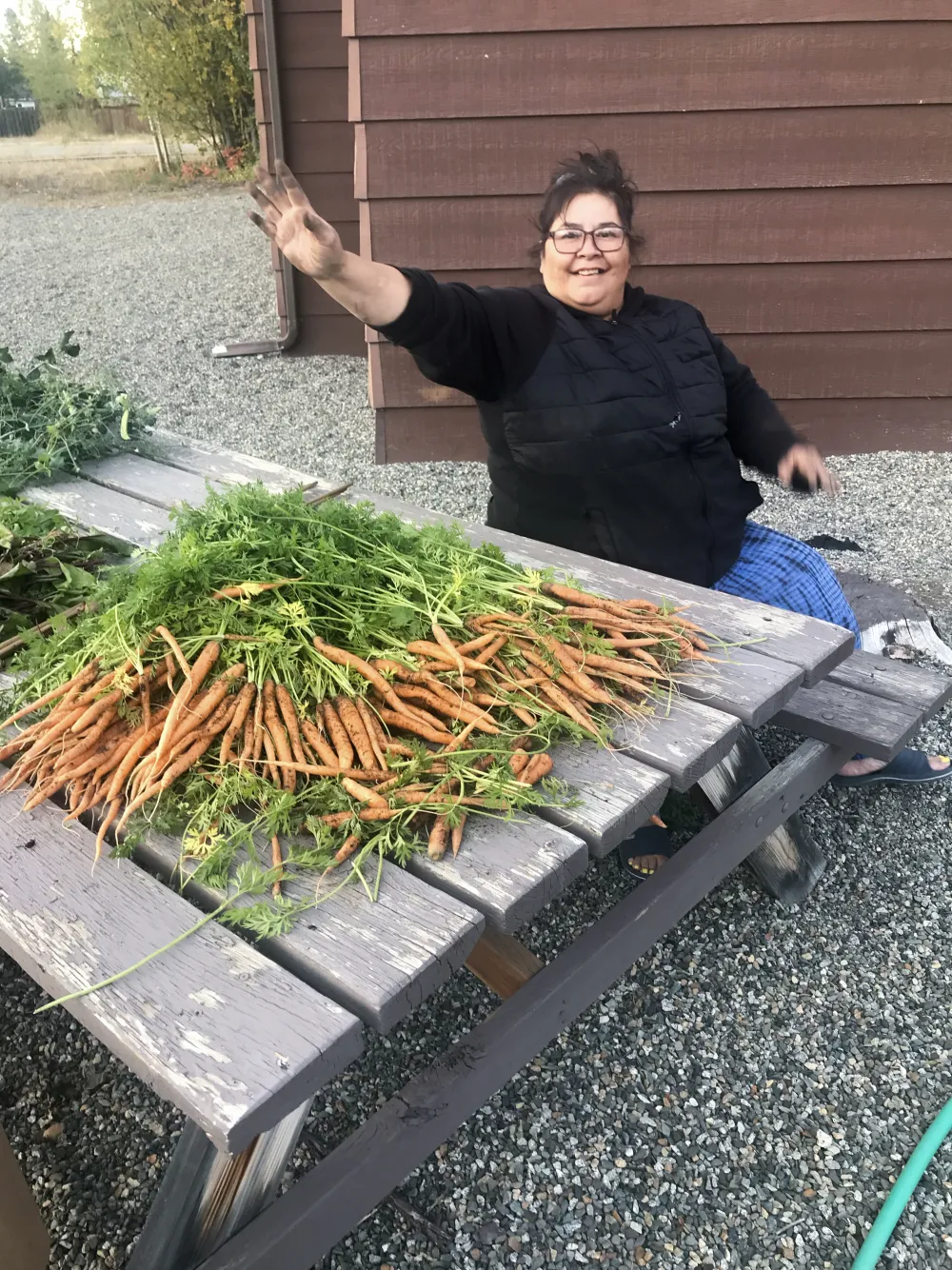
As the population of Whitehorse became more diverse, coalition members were encountering more newcomers who were eager to grow their own food but were living in apartments with no access to gardens.
Sometime around 2019, YAPC volunteer George Green read an article about a LandShare project in the Northwest Territories. Passionate about growing food, George called the organizer to learn more about the process for matching new gardeners with older people who were no longer able to manage the full potential of their gardens.
“I knew some aging gardeners with knowledge and raised beds, and helped connect them with people who were keen but had no opportunity to grow food,” George said. “It was exciting to watch the inexperienced folks learn how to grow and harvest.”
In a 2023 Yukon News interview, GroundShare gardener Dianne Nolan said “It’s very therapeutic for me. It’s my safe space. It’s my own personal healing, working with the soil and nurturing my heart, my soul. ”
One of the mutually beneficial projects happened outside the Northern Apostles Church in Porter Creek. Nancy Brady was a church member who was pleased with the way connecting with new growers helped support local food security as well as beautify the church grounds.
The YAPC GroundShare project officially ran for three years, from summer 2020 to 2023, engaging eight ‘matches’. In summer 2026, many of the matches continued to produce food for the families involved.
“I got a picture just this week of a young mother with her little guy clutching carrots he’d helped grow,” George shared.
George also connected some families with the Downtown Urban Gardeners Society, another organization with YAPC roots.
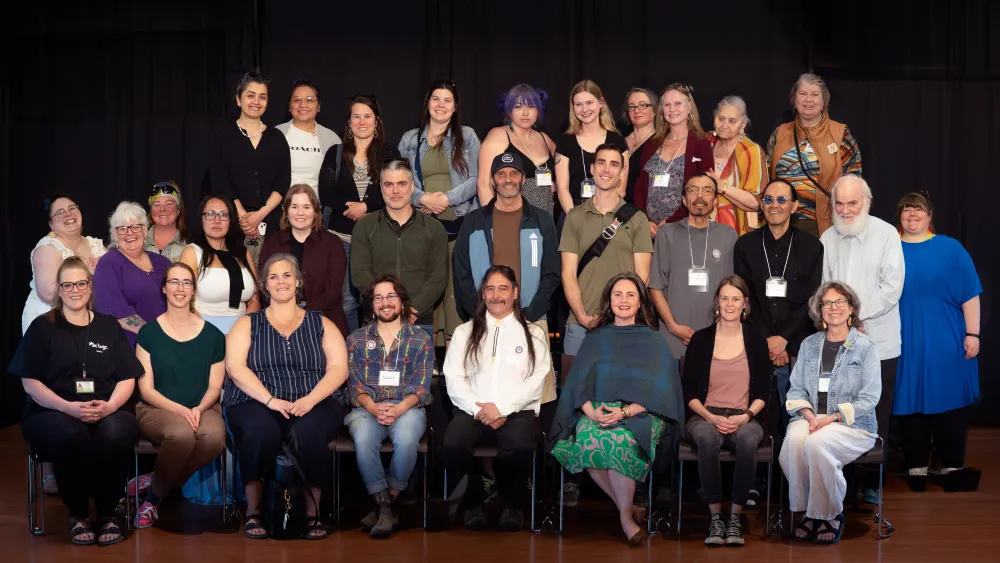
Homelessness is solvable. In 2026, The Yukon’s homelessness response system is under sustained and growing pressure. Each month, more people enter homelessness than exit it, and more than 80% of people experiencing homelessness have been unhoused for longer than six months.
Building on the 2017 Safe At Home action plan, YAPC commissioned A Place to Be: Framework for Community Action to End Homelessness 2025-2030. The process included data analysis, a territory-wide survey of 169 participants, focus groups, key informant interviews, and site-visits with service providers across Whitehorse, Dawson City, and Watson Lake. Recommendations were reviewed and validated by people with lived experience, service providers, and government partners.
The 112-page plan contains 29 recommendations across 4 priority areas:
Strengthen the Housing-Focused Workforce and Build the Right Housing Supply
Strengthen System Governance, Access, and Coordination
Embed Equity and Cultural Safety through First Nations and Lived Experience Leadership
Prevention and Housing Stability
For the first time, we have publicly available, reliable data to support decision-making and accountability.
The plan is monitored by the Community Advisory Board (CAB), the collaborative governance body responsible for aligning Yukon’s housing and homelessness systems. It brings together First Nations governments, Yukon Government, municipal governments, people with lived experience, service providers, and YAPC at a single shared table.
The framework anticipates a need for 238 supportive housing units by 2030 in order to reduce local homelessness by 50%.
More than 100 individuals, businesses, organizations and governments have endorsed A Place to Be including: City of Whitehorse, Kwanlin Dün First Nation, Ta’an Kwäch’än Council and Yukon Government.
Planning and implementation work has begun on 13 of the 29 recommendations. For example, 2026 saw the launch of sector-wide training with the Canadian Alliance to End Homelessness, bringing together participants from nine Yukon communities to build skills and practices to help people move from homelessness to stable housing.
No single organization or government can solve these issues on its own. We now have a clear set of priorities and a shared understanding of what it will take to end homelessness.
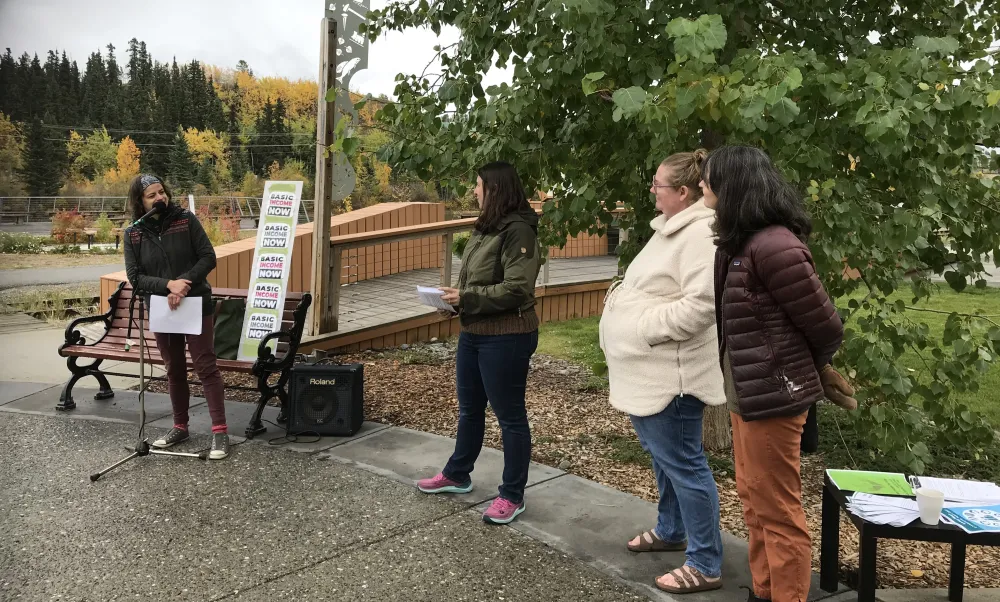
The Yukon Anti-Poverty Coalition recognizes that reducing poverty means all Yukoners need access to sufficient income. For decades, the coalition has consistently advocated for improvements to income-related systems such as social assistance, minimum wage, living wage, unemployment insurance, guaranteed annual income and more.
In 2019, YAPC members created a Basic Income Working Group. The group created a detailed Values Statement and background paper to guide YAPC’s advocacy efforts.
In 2020, the Yukon Government released a comprehensive review of its health and social programs called Putting People First. Recommendation 5.7 was a commitment to design and implement a guaranteed annual income pilot, in collaboration with the Yukon Anti-Poverty Coalition and potential funding partners and researchers.
YAPC hired an economist and a social science researcher to conduct a data analysis including from interviews and focus groups with a range of community members.
In September 2025 YAPC released the Basic Income Background Report as a step towards development of a pilot project for a Basic Income Guarantee (BIG).
In other jurisdictions, and unlike social assistance, BIG has been proven to minimize bureaucracy, reduce stigma and give people choice about how to meet their needs. It has the potential to reduce poverty, improve wellbeing and foster equity.
Project consultations with Yukon First Nations underscored the fundamental requirement to align a BIG with self-governing principles and wraparound supports, as well as respect for Indigenous cultural and economic practices.
YAPC also created an options paper for consideration by government decision-makers.
The coalition continues to press for thoughtful, community-supported design of a basic income program to fit the diverse needs of the Yukon population.